

ASIC Miner Monitoring in 2026:
How to Choose the Right Mining Management Software
As mining operations grow, managing large numbers of ASIC miners becomes increasingly complex. For modern bitcoin farms, bitcoin mine management software and asic management software have shifted from “nice-to-have” tools to essential infrastructure.
A small mining setup can often be controlled manually. Operators can check devices individually, restart miners when needed, and keep track of issues without dedicated tools. However, this approach quickly stops working when a farm grows to hundreds or thousands of ASIC miners. Equipment failures become harder to detect, technicians spend more time searching for problems, and even minor performance losses across the fleet can significantly affect profitability.
For modern mining operations, the challenge is no longer simply keeping miners connected. The challenge is maintaining stable performance, reducing downtime, and understanding what is happening across the entire infrastructure.
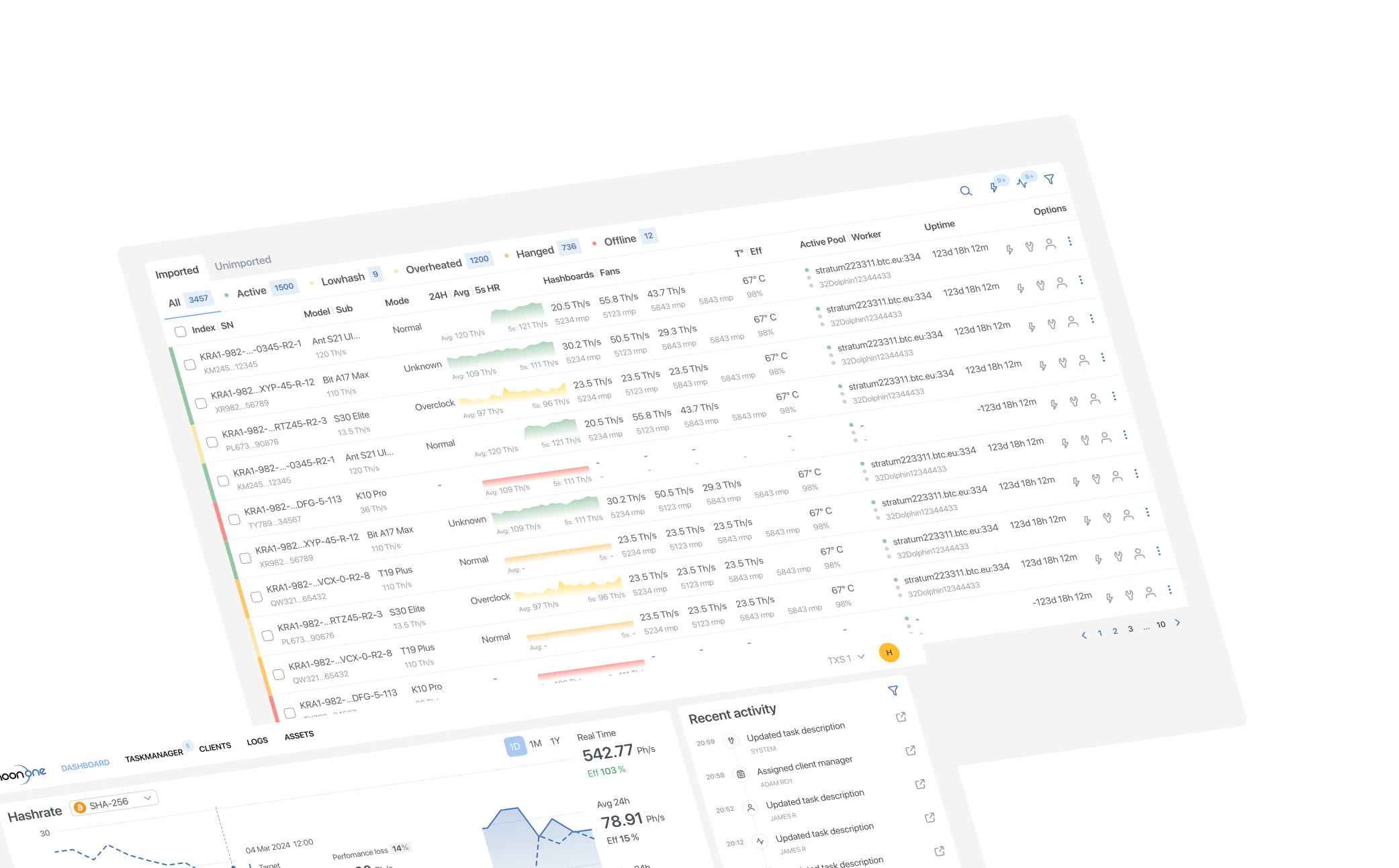
This is where bitcoin mining management software becomes essential. Platforms like MoonOne give operators real-time visibility into their mining equipment, help identify issues faster, and allow them to automate routine operational tasks.
A small mining setup can often be controlled manually. Operators can check devices individually, restart miners when needed, and keep track of issues without dedicated tools. However, this approach quickly stops working when a farm grows to hundreds or thousands of ASIC miners. Equipment failures become harder to detect, technicians spend more time searching for problems, and even minor performance losses across the fleet can significantly affect profitability.
For modern mining operations, the challenge is no longer simply keeping miners connected. The challenge is maintaining stable performance, reducing downtime, and understanding what is happening across the entire infrastructure.
This is where bitcoin mining management software becomes essential. Platforms like MoonOne give operators real-time visibility into their mining equipment, help identify issues faster, and allow them to automate routine operational tasks.

Why manual monitoring becomes a problem as mining farms grow
Many mining operations start without specialized management software. When there are only a few dozen ASIC miners, manual control may seem sufficient. Operators can open miner interfaces, check performance, and fix problems as they appear.
But as the number of devices increases, the amount of operational data grows exponentially.
A farm with hundreds of ASIC miners generates constant changes in hashrate, temperature, power consumption, network status, and hardware health. Monitoring this manually means relying on people to notice problems at the right moment.
The issue is not only that failures happen. The bigger problem is that operators often discover them too late.
A miner may continue running while producing reduced hashrate. A cooling issue may develop gradually before causing hardware failure. A network problem may disconnect equipment from a pool without being immediately visible.
Without a centralized monitoring system, these problems turn into lost production.
But as the number of devices increases, the amount of operational data grows exponentially.
A farm with hundreds of ASIC miners generates constant changes in hashrate, temperature, power consumption, network status, and hardware health. Monitoring this manually means relying on people to notice problems at the right moment.
The issue is not only that failures happen. The bigger problem is that operators often discover them too late.
A miner may continue running while producing reduced hashrate. A cooling issue may develop gradually before causing hardware failure. A network problem may disconnect equipment from a pool without being immediately visible.
Without a centralized monitoring system, these problems turn into lost production.
What is ASIC miner monitoring software?
ASIC management software is a platform that collects operational data from mining hardware and displays it through a single interface.
Instead of checking each miner separately, operators can monitor the condition of their entire mining operation from one place.
A modern monitoring system analyzes key parameters such as hashrate, chip temperature, power consumption, fan performance, network connectivity, and hardware status.
The purpose of monitoring is not simply to collect information. The real value is helping operators understand where production is being lost and what actions should be taken.
For example, a sudden hashrate decrease across several miners may indicate a technical issue that requires attention. A temperature increase may signal cooling problems before they lead to equipment failure.
The faster these situations are detected, the smaller the impact on mining profitability.
Instead of checking each miner separately, operators can monitor the condition of their entire mining operation from one place.
A modern monitoring system analyzes key parameters such as hashrate, chip temperature, power consumption, fan performance, network connectivity, and hardware status.
The purpose of monitoring is not simply to collect information. The real value is helping operators understand where production is being lost and what actions should be taken.
For example, a sudden hashrate decrease across several miners may indicate a technical issue that requires attention. A temperature increase may signal cooling problems before they lead to equipment failure.
The faster these situations are detected, the smaller the impact on mining profitability.
When does a mining operation need dedicated management software?
There is no universal number of ASIC miners that determines when a company needs monitoring software. The transition usually happens when manual processes stop providing enough visibility.
For many operators, this moment comes when they start managing multiple hundreds of devices or several locations.
Typical signs include:
At this stage, the problem is no longer the number of miners. The problem is the lack of a single operational system.
This is why ASIC management software becomes important for growing mining operations. It creates a unified view of equipment performance and helps operators move from reactive problem solving to proactive management.
For many operators, this moment comes when they start managing multiple hundreds of devices or several locations.
Typical signs include:
- operators spend significant time checking miner status manually;
- equipment failures are discovered only after hashrate drops;
- technicians receive repair tasks through messages or spreadsheets;
- there is no clear understanding of which issues have the biggest impact on production;
- managing multiple facilities becomes difficult.
At this stage, the problem is no longer the number of miners. The problem is the lack of a single operational system.
This is why ASIC management software becomes important for growing mining operations. It creates a unified view of equipment performance and helps operators move from reactive problem solving to proactive management.
How modern mining management software works
Traditional monitoring systems mainly answer one question: “What is happening with my miners?”
Modern mining farm management software helps answer a more important question: “What should I do next?”
A management platform continuously collects data from ASIC miners, analyzes equipment conditions, and helps operators prioritize actions.
For example, instead of receiving hundreds of alerts about offline miners, operators can understand which failures have the greatest impact on total hashrate and which issues can be resolved remotely.
Advanced solutions can also automate routine operations, including remote reboot, firmware management, diagnostics, and maintenance workflows.
This reduces the amount of manual work required from technicians and allows teams to focus on issues that actually affect mining performance.
Modern mining farm management software helps answer a more important question: “What should I do next?”
A management platform continuously collects data from ASIC miners, analyzes equipment conditions, and helps operators prioritize actions.
For example, instead of receiving hundreds of alerts about offline miners, operators can understand which failures have the greatest impact on total hashrate and which issues can be resolved remotely.
Advanced solutions can also automate routine operations, including remote reboot, firmware management, diagnostics, and maintenance workflows.
This reduces the amount of manual work required from technicians and allows teams to focus on issues that actually affect mining performance.
Why real-time monitoring matters for profitability
Mining profitability depends directly on uptime.
When a single ASIC miner stops working, the impact may seem insignificant. But across hundreds or thousands of devices, small interruptions accumulate into substantial losses.
Real-time bitcoin mine management software allows operators to identify problems as they happen instead of discovering them after daily performance has already declined.
The result is better control over:
For growing mining companies, improving operational visibility is often one of the fastest ways to reduce unnecessary losses.
When a single ASIC miner stops working, the impact may seem insignificant. But across hundreds or thousands of devices, small interruptions accumulate into substantial losses.
Real-time bitcoin mine management software allows operators to identify problems as they happen instead of discovering them after daily performance has already declined.
The result is better control over:
- equipment availability;
- maintenance priorities;
- technician workload;
- energy efficiency;
- overall farm performance.
For growing mining companies, improving operational visibility is often one of the fastest ways to reduce unnecessary losses.
Case study: managing a distributed mining operation with MoonOne
A mining operator running two facilities in Abakan faced challenges common for growing mining companies.
The operation included more than 2,100 ASIC miners with a combined capacity of 9.8 MW. Because the facilities were located approximately 50 kilometers apart, technicians spent significant time moving between sites.
Maintenance decisions were often made manually. Teams had to determine which equipment required attention and which repairs should be prioritized based on available information.
After implementing MoonOne, the operator gained centralized visibility across both facilities.
The system automatically identified unstable miners, helped restore equipment remotely when possible, and created maintenance tasks based on the impact on overall hashrate.
Instead of manually searching for problems, technicians received prioritized information about where their efforts would recover the most production.
After three months of operation:
The operation included more than 2,100 ASIC miners with a combined capacity of 9.8 MW. Because the facilities were located approximately 50 kilometers apart, technicians spent significant time moving between sites.
Maintenance decisions were often made manually. Teams had to determine which equipment required attention and which repairs should be prioritized based on available information.
After implementing MoonOne, the operator gained centralized visibility across both facilities.
The system automatically identified unstable miners, helped restore equipment remotely when possible, and created maintenance tasks based on the impact on overall hashrate.
Instead of manually searching for problems, technicians received prioritized information about where their efforts would recover the most production.
After three months of operation:
- downtime decreased from 9.8% to 2.4%;
- average hashrate increased by 12%;
- technician and transportation costs decreased by 340,000 RUB per month;
- site visits were reduced by 62%.
What to consider when choosing mining management software in 2026
When selecting a bitcoin farm management software solution, operators should look beyond basic monitoring capabilities.
A useful platform should provide a complete operational picture of the mining infrastructure. It should help answer not only whether miners are online, but also why performance changes, which problems require attention first, and how maintenance can be organized more efficiently.
For growing mining operations, the most important factor is not the number of available dashboards or metrics. It is whether the system helps reduce manual work and improve decision-making.
The future of mining management is moving from passive monitoring toward automation — from simply showing problems to helping operators solve them.
A useful platform should provide a complete operational picture of the mining infrastructure. It should help answer not only whether miners are online, but also why performance changes, which problems require attention first, and how maintenance can be organized more efficiently.
For growing mining operations, the most important factor is not the number of available dashboards or metrics. It is whether the system helps reduce manual work and improve decision-making.
The future of mining management is moving from passive monitoring toward automation — from simply showing problems to helping operators solve them.
Conclusion
ASIC miner monitoring has become a fundamental part of modern mining operations.
As farms scale, manual management becomes increasingly inefficient. Operators need systems that provide visibility across their infrastructure, reduce downtime, and help teams maintain stable production.
The right crypto mining management software allows mining companies to transform equipment data into actionable decisions and build more predictable operations.
MoonOne combines ASIC monitoring, remote management, and automation to help mining operators maintain efficient and reliable mining infrastructure.
As farms scale, manual management becomes increasingly inefficient. Operators need systems that provide visibility across their infrastructure, reduce downtime, and help teams maintain stable production.
The right crypto mining management software allows mining companies to transform equipment data into actionable decisions and build more predictable operations.
MoonOne combines ASIC monitoring, remote management, and automation to help mining operators maintain efficient and reliable mining infrastructure.